
It’s a common scene in the Greater St. Louis area: a massive summer thunderstorm rolls through, dumping inches of rain on our lawns and turning our streets into temporary rivers. As a homeowner, you might look out the window and think, "Well, at least that’s taking care of the mosquitoes." It makes sense, right? How could a tiny, fragile insect survive a literal wall of water falling from the sky?
But then, the clouds part, the sun comes out, and the humidity spikes. You step outside for some fresh air, and within seconds, you’re swarmed. It feels like there are more mosquitoes than before the storm began.
This is the "Rainy Day" Mosquito Paradox. At STL Pest Control, we’ve been serving the St. Louis community since 1989, and this is one of the most frequent questions we get from our neighbors. As a family-operated business with decades of local experience, we’ve seen every Missouri weather pattern imaginable, and we know exactly what these pests are doing while you’re inside staying dry.
In this guide, we’re going to pull back the curtain on mosquito survival tactics and explain why that heavy rain is actually their best friend: and your biggest challenge.
The Physics of Survival: Why Raindrops Don't Crush Mosquitoes
To understand why a thunderstorm doesn't "wash away" the mosquito population, we have to look at the incredible physics of these insects. To us, a raindrop is a minor splash. To a mosquito, a single raindrop is the equivalent of being hit by a mid-sized car. So, how do they survive thousands of "car crashes" per minute during a Missouri downpour?

Scientists have actually studied this using high-speed cameras, and the results are fascinating. Mosquitoes survive the rain for three specific reasons:
- Low Mass and High "Rideability": Because a mosquito weighs very little, it doesn't offer much resistance to a falling drop. Instead of the raindrop smashing against the mosquito, the mosquito actually "joins" the drop for a moment, riding the air current it creates or being swept along with it before peeling away.
- Waterproof "Armor": Mosquitoes are covered in tiny, water-repellent hairs called microtrichia. This makes them highly hydrophobic. Water doesn't "stick" to them or weigh them down; it beads off instantly, allowing them to remain light and maneuverable even in high humidity.
- The "Safety First" Instinct: Most importantly, mosquitoes aren't usually flying around in the middle of a torrential downpour. They sense changes in barometric pressure long before the first drop hits. When the sky turns that familiar Missouri gray, they head for cover.
Where Are They Hiding? The "Safe Rooms" in Your Backyard
When the sirens go off or the thunder rolls, you head to the basement or the center of your home. Mosquitoes have their own "safe rooms" right in your backyard. If you want to understand why your preventative yard treatments are so vital, you have to look at these hiding spots.
During a storm, mosquitoes typically retreat to:
1. The Underside of Foliage
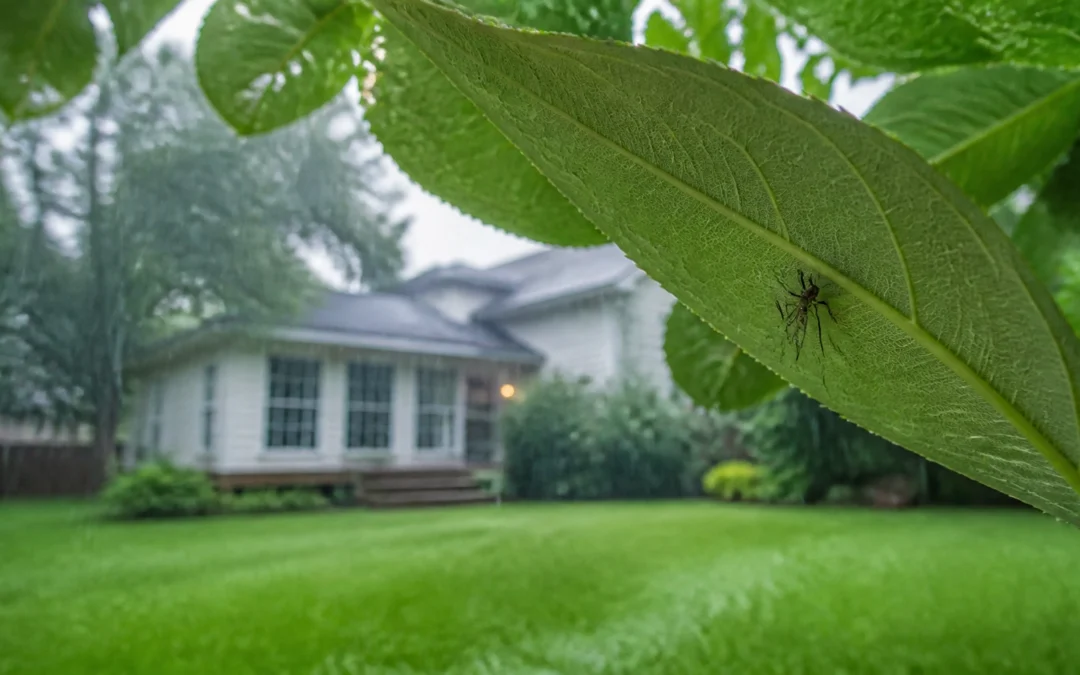
This is their primary bunker. Broad-leafed plants like hostas, hydrangeas, and ivy provide a natural umbrella. By clinging to the underside of a leaf, a mosquito stays dry and protected from the wind.
2. Dense Tall Grass and Shrubs
The thicker the vegetation, the better. Dense shrubs break the wind and provide a humid, still environment where mosquitoes can wait out the storm. If your lawn is a bit overgrown, you’re essentially providing a luxury hotel for them.
3. Man-Made Overhangs and Structures
Mosquitoes are experts at finding the "dead zones" around your home where the rain doesn't reach. This includes:
- The space under your deck or porch.
- Behind shutters and under roof eaves.
- Inside open garages or sheds.
- Under patio furniture covers.
4. Clogged Gutters
This is a double-threat. A clogged gutter provides shelter during the rain, and once the storm is over, the trapped water and rotting leaves create the ultimate breeding ground.

The Post-Storm Surge: Why Rain Actually Leads to More Mosquitoes
If the rain doesn't kill the adults, what does it do? It triggers a population explosion. In St. Louis, our Missouri warm spring and summer insects thrive on moisture.
Here is the "Reason-Why" breakdown of why your mosquito problem gets worse after a storm:
- Activation of Dormant Eggs: Some species, like the aggressive Aedes mosquitoes, lay their eggs in dry soil or containers, waiting for water. A heavy thunderstorm "activates" these eggs, causing them to hatch all at once.
- Creation of New Habitats: A single bottle cap full of water is enough for a mosquito to lay hundreds of eggs. After a storm, every toy, flower pot, or low spot in the yard becomes a nursery.
- Ideal Humidity: Mosquitoes are prone to dehydration. The thick, "soupy" humidity that follows a St. Louis rainstorm is exactly what they need to stay active for longer periods during the day.
- Disruption of Natural Predators: Heavy rain can sometimes wash away or disrupt the habitats of natural mosquito predators, like dragonflies or certain birds, giving the mosquitoes a temporary window of unopposed growth.
How STL Pest Control Fights the Paradox
As a family-operated business, we understand that your backyard is more than just a piece of property: it’s where your kids play and where you host your summer BBQs. We don't believe in "one-size-fits-all" solutions. Our approach to mosquito control in St. Louis is built on Integrated Pest Management (IPM).

When we visit your property after a rainy spell, we focus on:
- Source Reduction: We don't just spray; we identify. Our 14 licensed pros are trained to find those "hidden" water sources: like the saucer under a planter or a dip in a tarp: that you might have missed.
- Targeted Residual Protection: We apply professional-grade treatments to the undersides of leaves and those "hiding spots" we mentioned earlier. This creates a barrier that lasts, even through the next Missouri thunderstorm.
- Insect Growth Regulators (IGRs): We use specialized solutions that disrupt the life cycle of mosquitoes, preventing larvae from ever becoming biting adults.
- Fast, Fair Pricing: We know that mosquito spikes are an emergency for your comfort. That’s why we offer same-day service and fair, transparent pricing to get your yard back to normal quickly.
Honest Advice for St. Louis Homeowners
We’ve been the best solution for pests in St. Louis for over 35 years because we give it to you straight. You don't always need a professional for every little thing, but you do need a plan.
Our "Post-Storm Checklist" for You:
- Tip and Toss: Within 24 hours of a storm, walk your property and tip over anything holding water.
- Clear the Gutters: Make sure your gutters are flowing freely so water doesn't pool on your roofline.
- Mow Regularly: Keeping your grass short reduces the shaded resting areas mosquitoes love.
- Check the Screens: Ensure your window and door screens are tight, as mosquitoes often try to move indoors during heavy Missouri rains.
Reclaiming Your Peace of Mind
At the end of the day, you shouldn't have to check the weather forecast just to decide if you can enjoy your own patio. The St. Louis "Rainy Day" Mosquito Paradox is real, but it’s not unbeatable.
By understanding where they hide and why they thrive, you can take the first steps toward a bite-free summer. And when the local weather gets the best of your DIY efforts, our family is here to help yours. We are large enough to handle any infestation, but small enough to give you the personal, friendly service you deserve.

Ready to stop the swarm?
Don't wait for the next storm to pass. Contact STL Pest Control today for a consultation. Whether it's mosquitoes, rodents, or general household bugs, we provide the fast, expert service you need to get your peace of mind back.
Call us at (314) 833-6222 or visit stlpestcontrol.com to schedule your same-day service.