
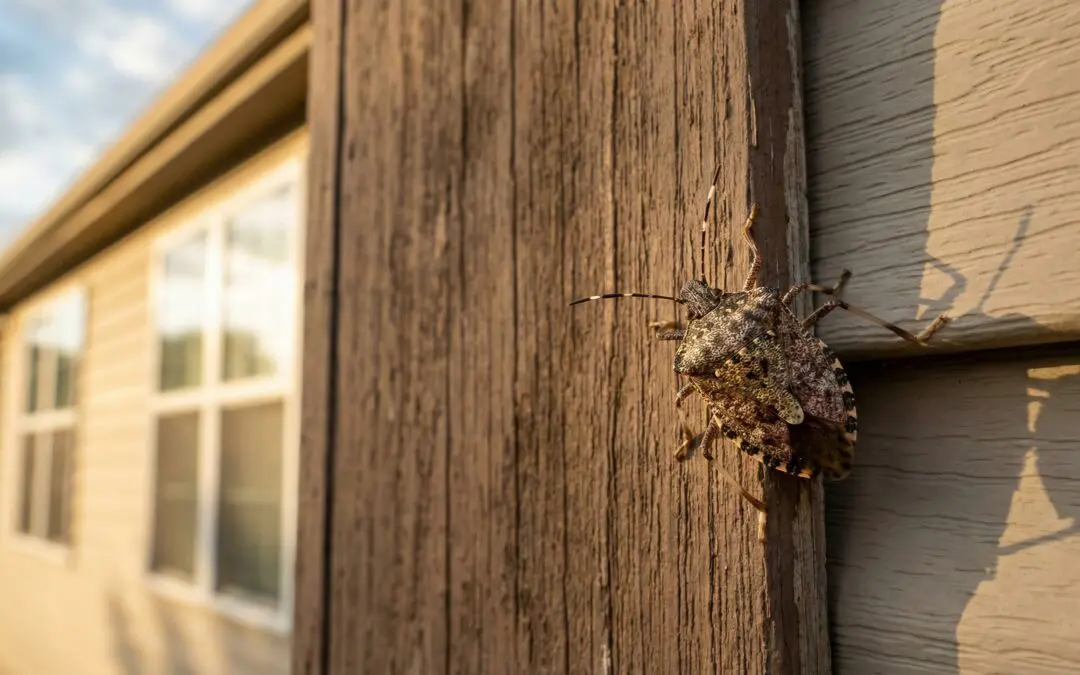
Every fall in Missouri, homeowners start noticing the same unwelcome visitor gathering on siding, porch lights, window frames, and garage doors — the Brown Marmorated Stink Bug (BMSB). These shield-shaped pests may be harmless to people, but they are frustrating, persistent, and downright foul when disturbed.
At STL Pest Control, we’ve been seeing these invaders grow in numbers across St. Louis over the last decade. Here’s a deep dive into what they are, why they show up in the fall, and what you can do to keep them outside where they belong.
What Exactly Is a Brown Marmorated Stink Bug?
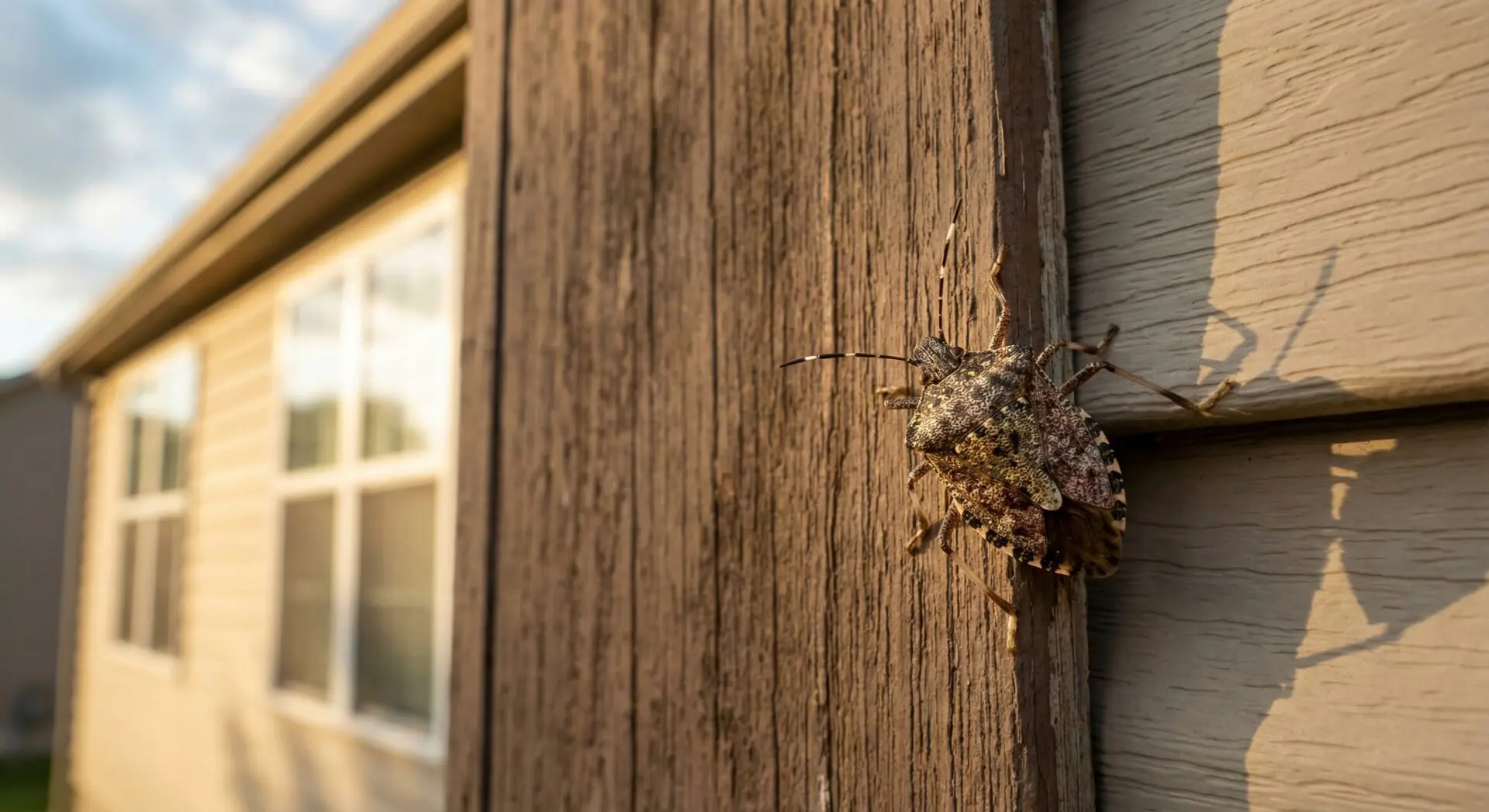
The Brown Marmorated Stink Bug (Halyomorpha halys) is an invasive species originally from East Asia. It first appeared in the U.S. in the late ’90s and has since spread to more than 40 states — Missouri included.
You can identify them by:
- Shield-shaped body, about ½ inch long
- Mottled brown color (“marmorated” means marbled)
- White bands on their antennae
- Checkered pattern along the edges of their abdomen
- Slow, clumsy flight that often ends with them bumping into walls or lights
They get their name from the foul-smelling odor they release when crushed or threatened — a smell that’s a mix of skunk, dirty socks, and cilantro depending on who you ask.
Why Missouri Homes See a Surge Every Fall
Stink bugs aren’t actually trying to move in with you — they’re looking for warmth and shelter as temperatures drop. In nature, they overwinter under bark or inside dead trees. But homes offer better protection, which is why they gather on sun-warmed walls in August–October and search for gaps to sneak inside.
Typical Fall Behavior:
- They gather on the south or west side of homes where the sun is strongest
- They slip into cracks around windows, siding, soffits, and vents
- They settle in attics, wall voids, crawlspaces, and basements for the winter
- They remain dormant until warm indoor air wakes them up mid-winter or early spring
That’s when homeowners suddenly find one wandering across a wall or window — but where there’s one, there are usually dozens hiding out of sight.
Are Stink Bugs Dangerous?
No — stink bugs don’t bite, sting, carry disease, or harm your home.
But they are a problem:
- They release a strong, lingering odor when crushed
- Their smell can attract other stink bugs
- They leave droppings on window sills
- They can stain curtains and walls
- They invade by the hundreds, not just a few
Outside, they cause serious agricultural damage, feeding on fruits, vegetables, and soybeans. But for most Missouri homeowners, they’re simply a major nuisance.
How Stink Bugs Get Inside Missouri Homes
Stink bugs don’t chew their way in — they exploit openings you may not even notice.
The most common entry points include:
- Gaps around window frames and screens
- Cracks under siding, fascia, and soffits
- Attic vents and exhaust vents without proper screening
- Holes around cable lines, plumbing, and utility penetrations
- Exterior light fixtures
- Door sweeps that are worn or missing
Because they flatten their bodies, stink bugs can fit through spaces as thin as a credit card.
Why You Shouldn’t Crush Them
Crushing a stink bug may solve the immediate problem, but it creates a bigger one:
- It releases the strong odor that lingers for hours
- The odor contains aggregation pheromones
- Those pheromones tell other stink bugs: “This is a safe place to gather!”
Instead, we always recommend gentle removal:
- Use a vacuum with a disposable bag
- Or trap them in soapy water
- Avoid squishing at all costs
The Best Ways to Prevent Stink Bugs in Missouri Homes
Prevention is the number one strategy. Once stink bugs get inside the walls, it becomes harder and more time-consuming to eliminate them.
1. Seal Exterior Cracks and Gaps
Look for openings around:
- Windows & doors
- Foundation and siding
- Chimneys
- Attic ventilation
- Utility lines
Caulk, expanding foam, and weather stripping go a long way.
2. Install Screens Where Needed
This includes:
- Attic and gable vents
- Bathroom and kitchen exhaust vents
- Dryer vents
- Soffit vents
Mesh should be 1/4-inch or smaller.
3. Reduce Outdoor Lights
Stink bugs are strongly attracted to light. Use:
- Yellow “bug light” bulbs
- Motion-detected lighting
- Curtains at night near windows
4. Keep Vegetation Off the Home
Trim back:
- Trees
- Vines
- Tall bushes
Stink bugs hide in vegetation during the day and wander onto the home afterward.
5. Consider a Professional Perimeter Treatment
A well-timed late summer or early fall barrier treatment can drastically reduce the number of stink bugs that land on — or try to enter — your home.
STL Pest Control has products designed specifically for seasonal invaders like the Brown Marmorated Stink Bug.
How STL Pest Control Treats Stink Bugs (Our Approach)
We use a multi-step strategy that’s focused on prevention, exclusion, and long-term reduction:
1. Exterior Barrier Application
We treat high-pressure areas including siding, soffits, rooflines, windows, and entry points.
2. Entry Point Inspection
We help identify small cracks and gaps most homeowners never notice.
3. Interior Removal (If Needed)
If stink bugs are already inside wall voids or attics, we use safe, targeted removal methods — never methods that drive them deeper into your home.
4. Long-Term Prevention Plan
Because stink bugs return every year, seasonal protection keeps them from becoming a recurring fall nightmare.
When to Call STL Pest Control
You should call when you notice:
- Stink bugs gathering on the sunny side of your home
- Bugs squeezing into windows or siding
- A sudden appearance of stink bugs inside in fall or winter
- A recurring “stink bug season” every year
We’ve been protecting St. Louis homes since 1989, and we know exactly how to keep these seasonal pests under control.
📞 Call STL Pest Control at (314) 833-6222
🌐 Schedule online at stlpestcontrol.com