

On a quiet winter night in St. Louis, when the furnace hums and the house settles, homeowners often hear it for the first time.
A faint scratching inside the wall.
A soft scurry across the ceiling.
It is rarely dramatic. It is rarely loud. But it is almost always the beginning of a rodent problem.
Across St. Louis — from brick homes in South City to newer builds in St. Charles County — rodents enter houses every year looking for the same three things: warmth, shelter, and food. And while many homeowners assume “a mouse is just a mouse,” the reality is more complicated.
Different rodents behave differently. They enter differently. They nest differently. And they must be handled differently.
Understanding which species is invading your home is the first step toward solving the problem.

The House Mouse: Small, Quiet, and Remarkably Persistent
The house mouse is the most common rodent found inside St. Louis homes. Small enough to slip through an opening the size of a dime, it can disappear into walls, cabinets, and appliances almost instantly.
Most homeowners never actually see the mouse itself. They see the signs first. Small droppings along baseboards. Shredded paper in a drawer. A cereal box with the corner chewed through.
House mice reproduce quickly. What begins as a minor nuisance can quietly become a larger infestation in a matter of weeks. Because they stay hidden inside wall voids and attics, the problem often feels invisible — until the noises grow more frequent.
Norway Rats: The Foundation Dwellers
If house mice are subtle, Norway rats are forceful.
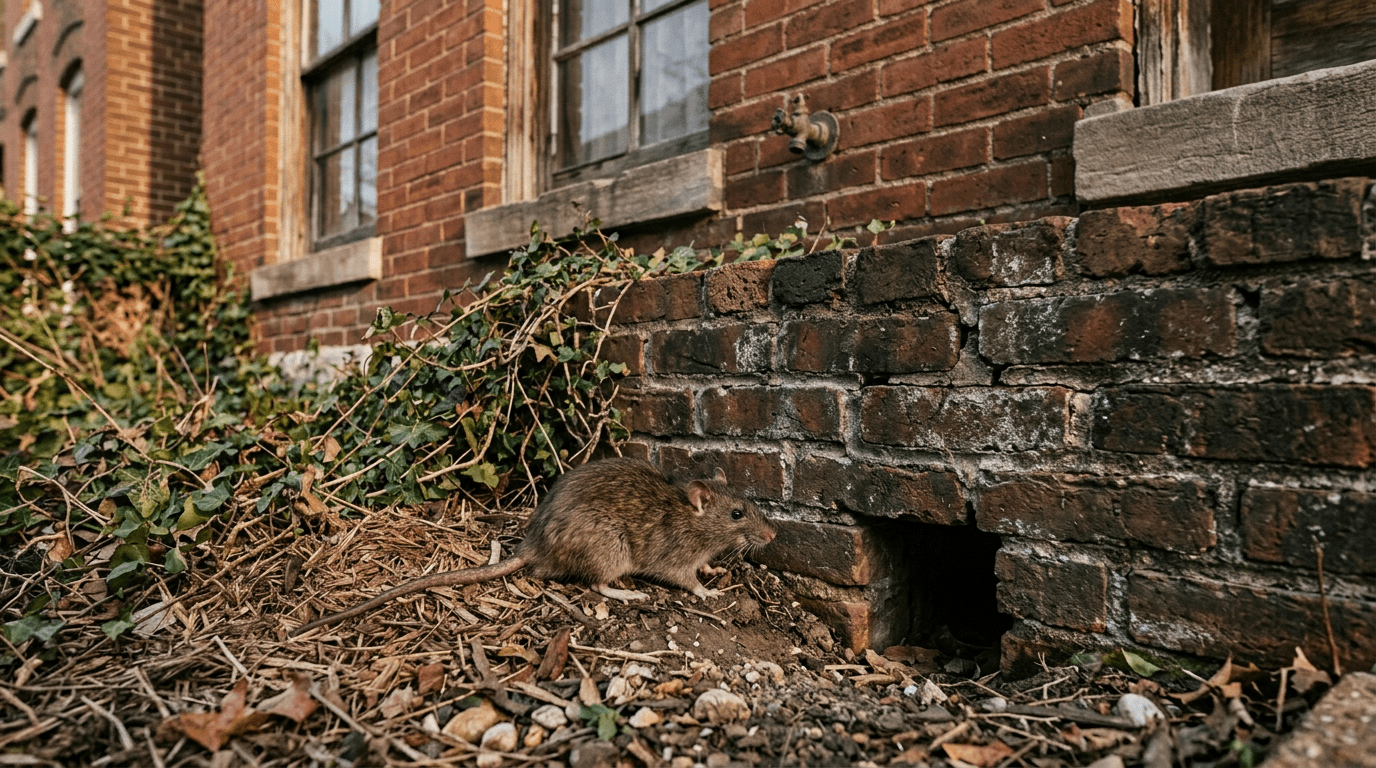
Stockier and significantly larger, Norway rats tend to stay low to the ground. They burrow along foundations, squeeze through damaged vents, and enter through gaps near garage doors or sewer lines.
In older St. Louis neighborhoods, where brick foundations meet decades of settling soil, these entry points are not uncommon.
Homeowners may notice larger droppings, gnaw marks along wood, or even burrow holes near the base of the house. Unlike mice, Norway rats are strong chewers. They can damage structural materials and, in some cases, plumbing.
When they move in, the signs are harder to ignore.
Roof Rats: The Climbers Above
Not all rodents stay near the ground.
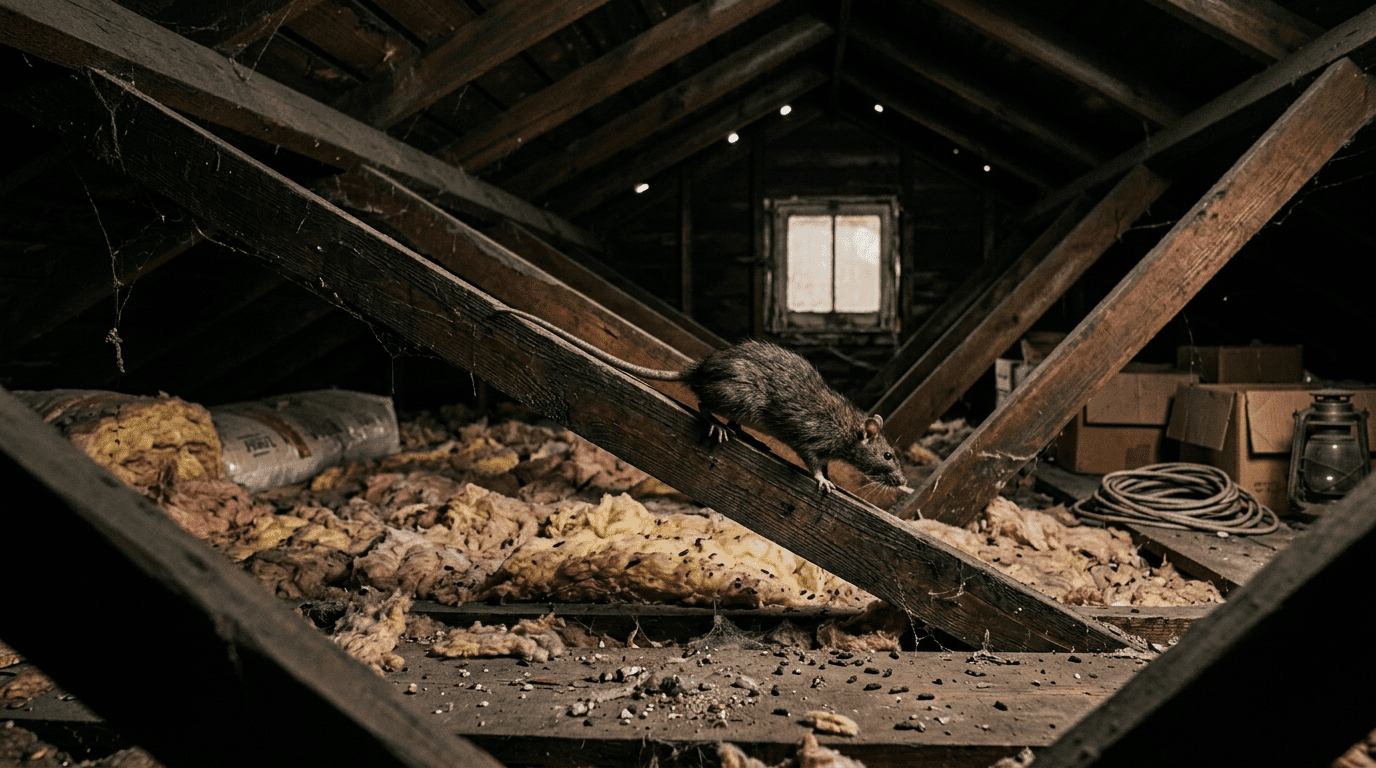
Roof rats, more agile and slender, prefer higher ground. They travel along utility lines, tree branches, and rooflines, eventually settling into attics and upper wall cavities.
Homeowners typically hear them first. Movement above the ceiling. Light thumping across attic beams.
In neighborhoods with mature trees touching rooftops, roof rats can move from branch to attic with surprising ease. Their habit of chewing electrical wiring adds an additional concern beyond contamination or insulation damage.
When rodents are active overhead, it often feels more unsettling. The invasion feels closer.
Deer Mice: A Rural Concern with Real Risks
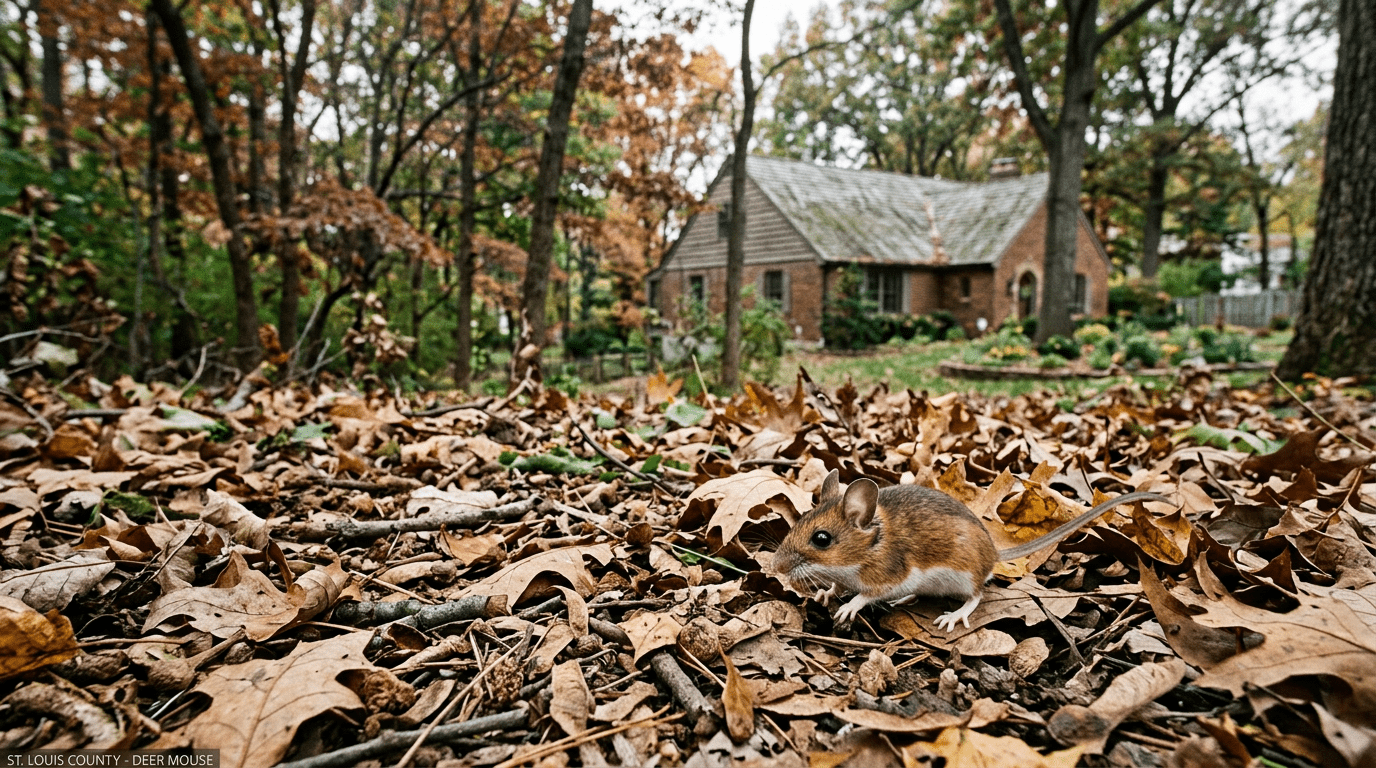
In the more wooded areas of St. Louis County, deer mice are sometimes found in garages, sheds, and seasonal properties.
They resemble house mice, but they are more commonly associated with rural environments. Identification matters here, not just for removal, but for safety. Deer mice are known carriers of hantavirus, making professional handling important when activity is discovered.
Most homeowners will never encounter one. But in properties near wooded lots or open land, they are part of the larger rodent picture in the St. Louis region.
Why Rodents Choose St. Louis Homes
Rodents do not invade homes because they are dirty. They invade because homes offer protection from the Midwest climate.
Cold winters drive them indoors. Heavy rains flood burrows. Small gaps around utility lines, foundations, and aging brick create opportunities.
Even well-maintained homes can have openings most homeowners never notice.
In many cases, the rodents were already nearby — living in yards, alleys, or nearby green space — long before they crossed the threshold.
Why Quick Fixes Rarely Work
Hardware store traps can remove a rodent. They rarely solve the problem.
Without identifying how the animal entered — and sealing that entry point — another will follow. Without understanding the species, trap placement may be ineffective. Without addressing nesting areas, reproduction continues unseen.
Rodent control is less about reacting and more about closing the door behind them.
The Difference a Professional Inspection Makes
Effective rodent control in St. Louis begins with identification.
Which species is present?
Where are they entering?
How extensive is the activity?
A thorough inspection reveals patterns most homeowners never see — rub marks along beams, subtle foundation gaps, insulation disturbance in corners of an attic.
From there, exclusion work seals entry points, targeted trapping reduces current activity, and prevention strategies reduce the chance of recurrence.
Since 1989, STL Pest Control has worked in homes across the St. Louis metro area, addressing rodent problems in both historic brick homes and modern builds.
Rodent activity is common. Long-term solutions are possible.
When to Take Action
If you hear scratching more than once, see droppings repeatedly, or notice gnaw damage, the problem is unlikely to resolve on its own.
Rodent infestations rarely improve with time.
But early identification and proper exclusion can prevent larger damage and more complicated infestations later.
In St. Louis, rodents are part of the environment. They do not have to be part of your home.