
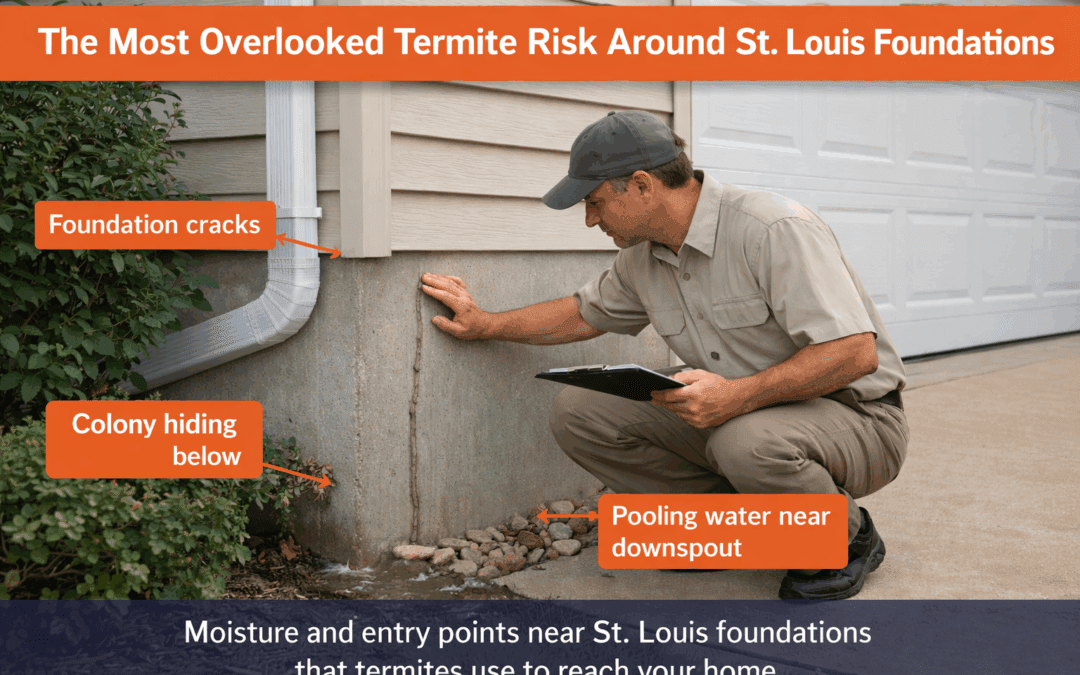
When most homeowners think about termites, they picture damage hidden deep inside walls or crawlspaces. But in the St. Louis area, one of the biggest termite risks starts outside the home — right at the foundation.
Because it’s out of sight and often mistaken for normal wear, this risk is easy to miss until termites have already gained access.
Why Foundations Matter So Much in St. Louis
Homes throughout St. Louis are especially vulnerable to foundation-level termite activity due to a combination of factors:
-
Clay-heavy soil that holds moisture
-
Seasonal rainfall and humidity
-
Older concrete foundations with hairline cracks
-
Landscaping installed close to the structure
Termites don’t need large openings. Tiny gaps, seams, or moisture-prone areas are enough to allow them to move from soil into the structure unnoticed.
The Overlooked Risk: Hidden Moisture at the Foundation
The most common — and overlooked — termite risk around foundations is persistent moisture.
This moisture often comes from:
-
Downspouts discharging too close to the foundation
-
Poor grading that allows water to pool near walls
-
Mulch or soil piled against siding or concrete
-
Cracks that hold damp soil against the foundation
Moisture softens materials, attracts termites, and allows them to build mud tubes that protect them as they travel into the home.
Because these areas are low, shaded, or partially hidden, homeowners often don’t notice the warning signs.
Why Termite Activity Is Easy to Miss at Ground Level
Termites prefer to stay hidden. At the foundation, they can:
-
Travel behind mulch or landscaping
-
Enter through expansion joints or utility penetrations
-
Build thin mud tubes that blend into concrete
-
Move behind garage walls or finished basements
Unlike roof leaks or interior damage, foundation-level termite activity rarely causes immediate visible problems. By the time signs show up indoors, the colony may already be established.
Common Foundation Conditions That Increase Termite Risk
Certain conditions around St. Louis homes consistently show up during termite inspections:
-
Mulch or soil touching siding
-
Foundation cracks left unsealed
-
Wood trim or framing close to soil
-
Stored items stacked against foundation walls
-
Poor drainage near garages and patios
None of these issues alone guarantees termites — but combined, they significantly raise the risk.
Why DIY Checks Often Miss This Problem
Homeowners often check for termites by looking inside the house. Unfortunately, the most important inspection areas are outside.
DIY checks often miss:
-
Subtle mud tubes along concrete seams
-
Cracks hidden behind shrubs or decorative rock
-
Moisture buildup near downspouts
-
Entry points hidden at garage corners
Professional inspections focus on soil-to-structure contact, moisture patterns, and foundation conditions that termites rely on long before damage appears.
How Routine Inspections Help Catch Problems Early
A professional termite inspection looks beyond obvious damage and focuses on:
-
Foundation seams and expansion joints
-
Drainage patterns around the home
-
Signs of moisture retention
-
Early termite activity before structural damage
Catching termite risk at the foundation level allows for simpler, more targeted solutions and helps prevent expensive repairs later.
The Bottom Line for St. Louis Homeowners
Termite problems don’t usually start inside the home — they start where the house meets the ground.
Paying attention to foundation conditions, moisture, and landscaping can significantly reduce termite risk. And when something doesn’t look quite right, an inspection can provide clear answers before small issues turn into major ones.